SHARE
How Memory Care Communities Are Designed to Reduce Anxiety
When families tour a memory care community for the first time, they often notice that it feels different from other parts of the building, calmer, quieter, more contained. That feeling is not accidental. Every element of a well-designed memory care environment is intentional, informed by decades of research into how the physical environment affects people living with cognitive change.
Understanding the thought behind the design can help families feel more confident about the environment their loved one will be living in, and why it matters so much.
Why Environment Matters in Dementia Care
For individuals living with Alzheimer's disease or other forms of dementia, the environment is not just a backdrop; it is a form of care. A confusing, overstimulating, or unfamiliar setting can increase agitation, anxiety, and disorientation. A well-designed space does the opposite: it provides visual clarity, reduces decision fatigue, and creates a sense of calm and security that medication alone cannot achieve.
The goal of memory care design is simple in concept and complex in execution: make the environment do as much work as possible so the resident can navigate their day with less confusion and more comfort.
Simplified Layouts and Wayfinding
Memory care neighborhoods are typically designed with straightforward, looping floor plans that allow residents to walk freely without reaching dead ends or confusing intersections. Hallways lead naturally back to common areas, reducing the frustration of getting "lost" and the anxiety that comes with it.
Visual cues are placed throughout the neighborhood, distinct colors, familiar objects, personalized memory boxes outside apartment doors, to help residents identify their own space. These cues replace the need for cognitive processing that may no longer be reliable, allowing residents to orient themselves intuitively.
Color and Lighting
Color choices in memory care are not decorative decisions; they are functional ones. Contrasting colors are used to help residents distinguish between floors, walls, and furniture. Doorframes may be painted a different color from the wall to clearly signal an entryway. Bathroom fixtures are chosen in contrasting tones so they are easier to identify and use.
Lighting is equally intentional. Natural light is maximized wherever possible, as it helps regulate circadian rhythms, a critical factor for residents who experience sundowning. Harsh fluorescent lighting is avoided in favor of warm, even illumination that reduces glare and creates a soothing atmosphere.
Noise Reduction
Excessive noise, alarms, loudspeaker announcements, echoing hallways, can be deeply distressing for individuals with dementia. Well-designed memory care communities minimize ambient noise through sound-absorbing materials, carpeted common areas, and design choices that contain sound within specific zones.
Team communication is handled discreetly rather than broadcast overhead. The result is an environment that feels peaceful rather than institutional, a distinction that has a measurable impact on resident behavior and well-being.
Secured Outdoor Spaces
Access to the outdoors is essential for mental and physical health, but for residents with a tendency to wander, unsecured outdoor areas present a significant safety risk. Memory care communities address this with secured gardens and courtyards, enclosed outdoor spaces where residents can walk, sit, enjoy fresh air and sunlight, and engage with nature without risk.
These spaces are designed with looping walking paths, shaded seating, raised garden beds, and sensory plants that engage smell and touch. They provide the benefits of outdoor time within a safe, supervised environment.
Familiar and Homelike Interiors
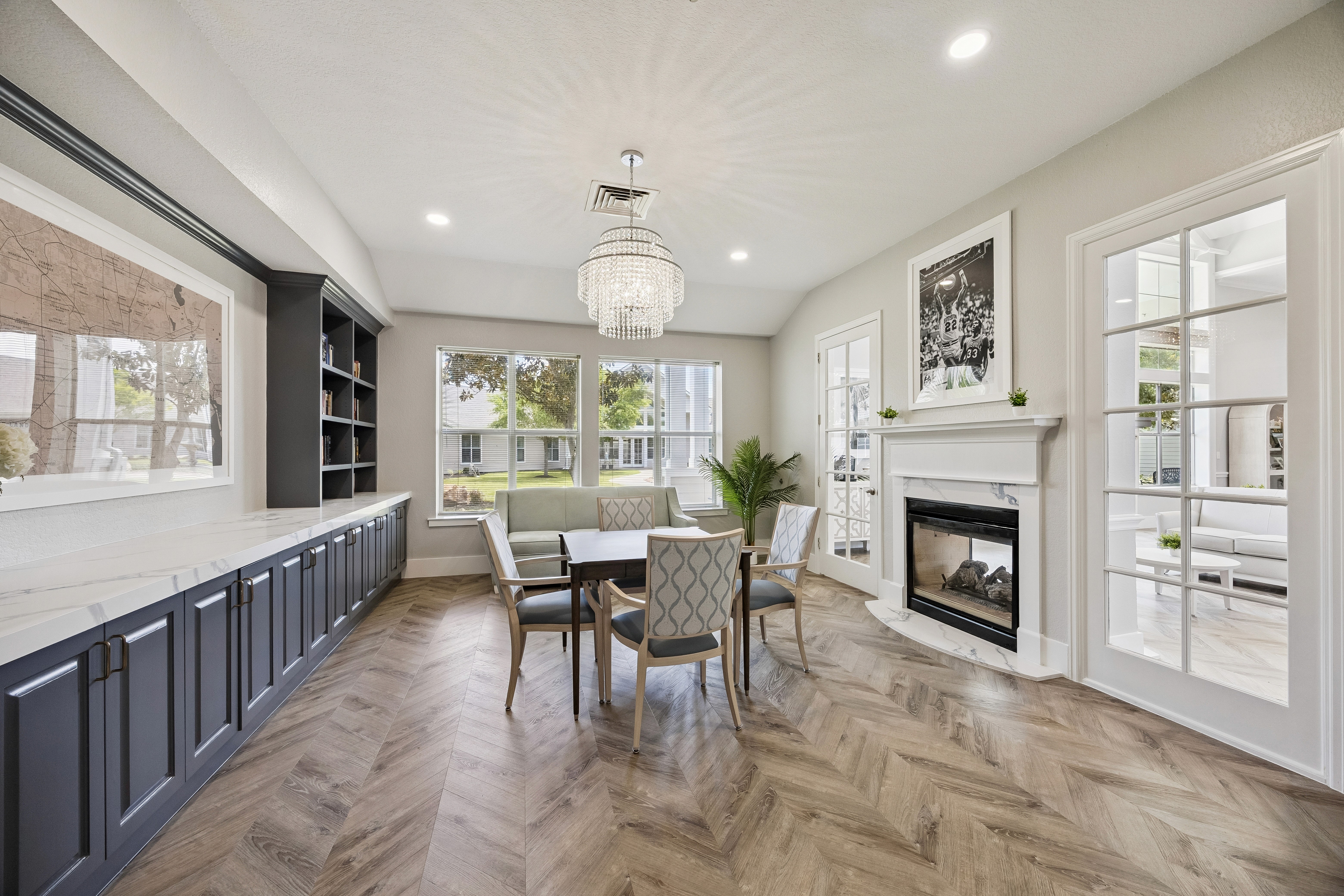
The visual language of a memory care neighborhood is deliberately residential, not clinical. Furnishings are comfortable and domestic in style. Common areas are designed to resemble living rooms rather than hospital waiting areas. Kitchenettes, bookshelves, and familiar household objects are placed throughout the neighborhood to create a sense of normalcy and recognition.
This is not an aesthetic choice; it is therapeutic. Familiar environments activate long-term memory and provide a sense of comfort that clinical settings cannot replicate.
What This Means for Families
When you tour a memory care community, look beyond the surface. Notice whether the environment feels calm or chaotic. Ask about the design choices, the colors, the lighting, the floor plan, the outdoor spaces. A community that can explain the purpose behind its design is a community that understands dementia care at a deeper level.
The right environment will not reverse cognitive decline. But it can meaningfully reduce anxiety, improve sleep, decrease agitation, and create more moments of calm and connection, which, for families navigating this journey, makes an extraordinary difference.